
I don't know how this other kind of framework works in practice. One part of it, I think, is recognizing that if everyone in Canada is "us", our history goes much farther back than Frobisher and Cartier. Our books trace the stream of history across the ocean back to England and France, but it includes what happened here for indigenous people going back to time immemorial, even when no English and French people were in sight. And it streams back to Kashmir and Guangdong and Jamaica and Italy.
About 2 million Canadians trace their ancestry back to Italy; that's about 5% of the population.
Edited 26d ago
Italy's history in the 1800s is one of throwing off foreign occupation and uniting into one nation - the Risorgimento - that culminated in the 1860s. The irony is that a population boom and economic downturn directly related to the unifying wars led to a generation that could not find room in the nation their parents and grandparents had made for them. A flow of emigration to the Americas, including Canada, ensued.
Edited 26d ago
So, I am trying to hold an idea of Canada in my mind where the story of Italian Canadians (and West Indians and Maghrebi and Ukrainian and, and, and) is as foundational and collectively held as the story of the Great Peace and the Acadian expulsion or the national railroad. If there is a "we" here, as a Canadian, it's my story too. It feels strange and uncomfortable, which is why I started this poll. And, why, I think, it has so few responses. Anyway, I am Yes, but it's hard.
Edited 26d ago
I should probably point out that many people here in Canada fucking *hate* the very idea of this kind of equitable multiculturalism. The idea that arepas and poutine are both fully and equally Canadian sounds like hell to them. This is not unusual anywhere, I don't think.
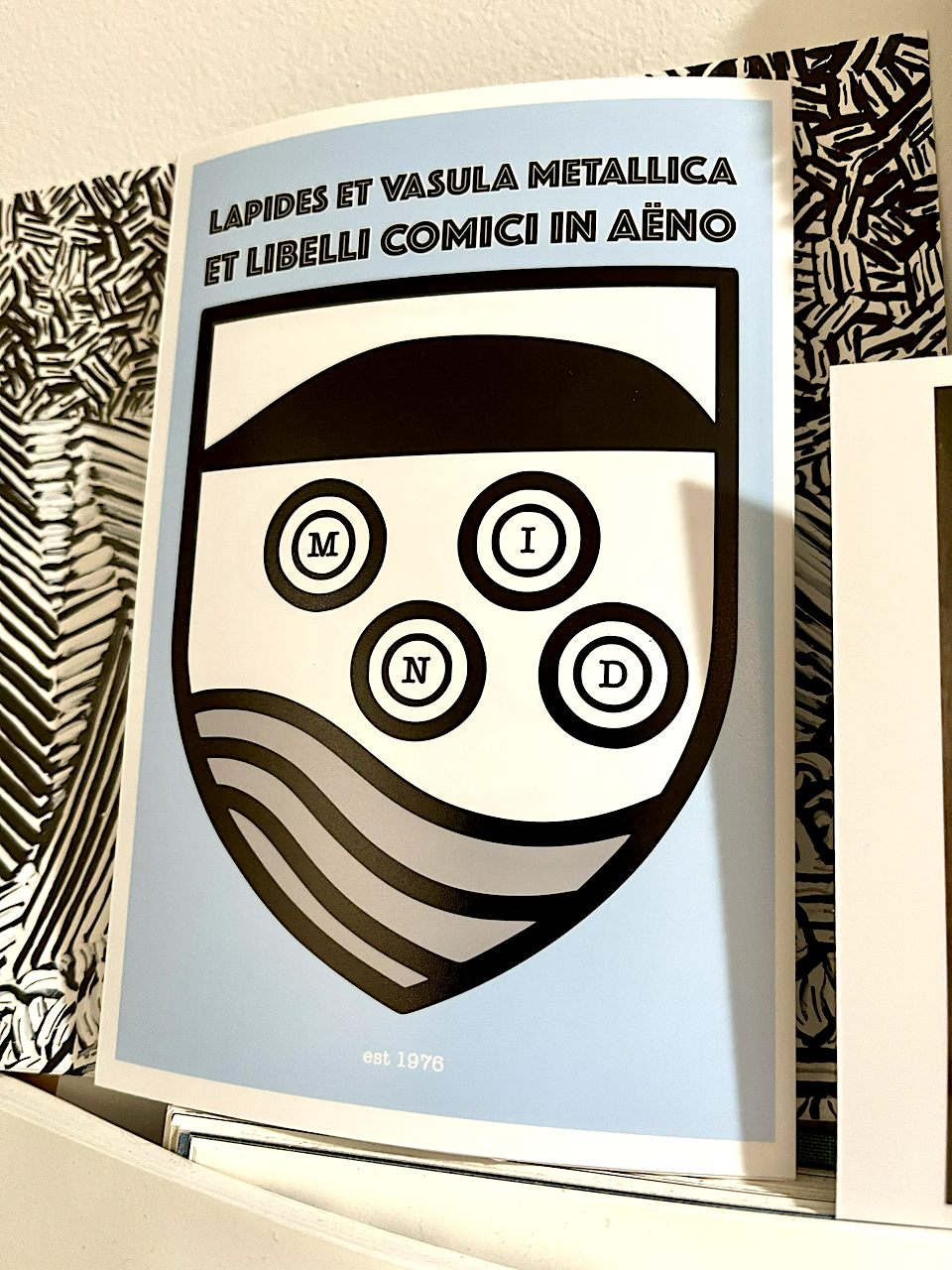
@evan I recently created a "coat of arms" for my old high school / for reasons unrelated to this thread / the four circles are meant to represent plates around a dinner table / one for the first nations, one for the settlers (colonizers), one for everyone who has arrived since "first contact" and one for all the people who have simply been born in to it / it felt more appropriate than the standard fare english-french catholic-protestant symbolism of the city's current flag / or bagels, obviously

@evan people in ontario who think that poutine isn't the result of multiculturalism 🤔

@evan hmm, but arepas and poutine aren't both fully and equally Canadian, right?
I say this as an immigrant who's moved a lot and has a multicultural identity - I don't think there's anything wrong with saying that poutine is Canadian and arepas are not. Like, if I'm trying to eat arepas, I'm not going to go to a Canadian restaurant. Am I missing something?
@evan I'm not entirely sure I understand your point. There are plenty of large English and French holidays that aren't celebrated here. Take Guy Fawkes day, for instance. While we have toned down the religious aspect of European holidays (Easter is often a two week holiday there), those are still part of our main holidays. I think we should dump government celebrations of all religious days. As for food, well I'd struggle to think of what a "Canadian" restaurant might serve, because at home we all eat a variety of foods that originate from all over the world. And we mix it up, but no one would ever call it fusion, it's just homemade food. Ottawa calls itself the Shawarma Capital of Canada, but it wasn't invented in Canada so calling it Canadian food feels like appropriation. Poutine and Nanaimo bars were invented here, so they get the Canadian designation. I guess we can call them Canadian shawarmas 🤷🏼♀️

@evan Perhaps it would be useful to move this to specifics. For instance: Is Québec justified in expecting immigrants to become francophone and implementing policies to do so?

@evan
How do things like cultural appropriation jive with this? I know you've posted in the past about the appropriateness of cooking recipes from another culture, which I found strange because the power imbalance was the opposite than I would have expected.
It seems more useful to talk about raw power imbalances. Yes, acknowledge there are patterns in who is powerful and who lacks agency, but focusing on the imbalance and the abuses, which go from powerful to powerless.
#notall
@mpjgregoire such a good question! I think the central pillar of civic nationalism in Quebec is the French language -- more even than shared values or institutions. To the extent that it goes past what could be simple ethnic nationalism, I think that's a really good step forward.
@mariellequinton the point is simple: Canada is the people who are here, Canadian history is our collective and individual stories, and Canadian culture is the things we say and make and do.
@evan Hmm. But that doesn't make every event in world history important to Canadian history. Some things are less important. Some Australian MP that resigned 50 years ago is part of Canadian history in your sense, but I wouldn't label it as important. It's ok to be a footnote.
@being you are, and you should read the rest of the thread. In western multiculturalism we treat immigrant and indigenous cultures as secondary and subordinate and I want to think about other ways. One is to define Canada as the people who are here right now, and Canadian culture as the things those people make and do.
Edited 26d ago
@being @evan there is something here about poutine being invented in Canada, something like how hamburgers and hot dogs were effectively German but were transformed in USA (mostly by adding bread lol) into something uniquely Usonian. I don’t know anything about Canadian arepas, but surely there’s unique fillings or something that are uniquely Canadian?
@modulusshift @being do they have to be uniquely Canadian to be Canadian? Or is Canadian food just the food that Canadians eat, unique or not?

@evan @modulusshift @being isn't this the difference between a "melting pot" society and a "mosaic" society?
@evan @modulusshift something being uniquely Canadian does make something more Canadian, yes. Concepts are defined to encompass an idea in distinction from another. I think we have to watch out for inclusion becoming erasure - calling arepas Canadian undermines their actual origin, in my opinion.
@lambic @modulusshift @being probably one difference! Although even in Canada's "patchwork quilt" model, there are some patches that are essential, and others that are optional add-ons. Maybe we need to say, this is the quilt we have, it's our quilt, and every piece is essential to make it what it is.
@evan I did read the rest of the thread! Just think I disagree based on my own understanding of multiculturalism in the West (somewhat influenced by my degree in Africana Studies) :)