
Should Fediverse Web apps show remote content to unauthenticated users?
For example, you point your browser at a.example. You are not logged in.
You navigate to a list of a local user's followers at a.example/user1/followers .
If you click on a profile in that list, it loads a.example/remote/user2@b.example , a profile page for a remote user.
If you click on an image posted by that remote user, it loads a.example/remote/b.example/image/33 , showing the remote image and all comments on it.
If this is not an interesting question to you, feel free to skip it!
Edited 6d ago

@evan I’d say very much yes. It shows the connectivity of fedi rather than implying fragmentation.

@evan I voted yes. As long as everything in the flow honors user2@b.example's visibility settings I think that should be fine (unless I'm missing something important in the premise).
Edited 6d ago

@evan To be clear, is 'it' in the above always the local browser as opposed to the server a.example (proxy-requesting on the unauthenticated user's behalf).

@evan Yes, depending on privacy settings of course. For public posts, absolutely yes
Thanks to everyone who replied! I am a "yes, but...".
Yes, but you should clearly identify it as remote content or a remote profile.
People on here freak out sometimes when they see remote profiles or remote content on a Fediverse-enabled server. They say it has "shadow profiles" or "scraped content."
Clearly identifying that it comes from the Fediverse can help with this a lot.

@evan just thinking, if user click on a remote profile, it could technically just go straight to remote server’s profile page? 🤔
Probably confusing for some users, but could potentially “educate” them that the fediverse actually consists of multiple servers linking/talking to one another.
Edited 5d ago

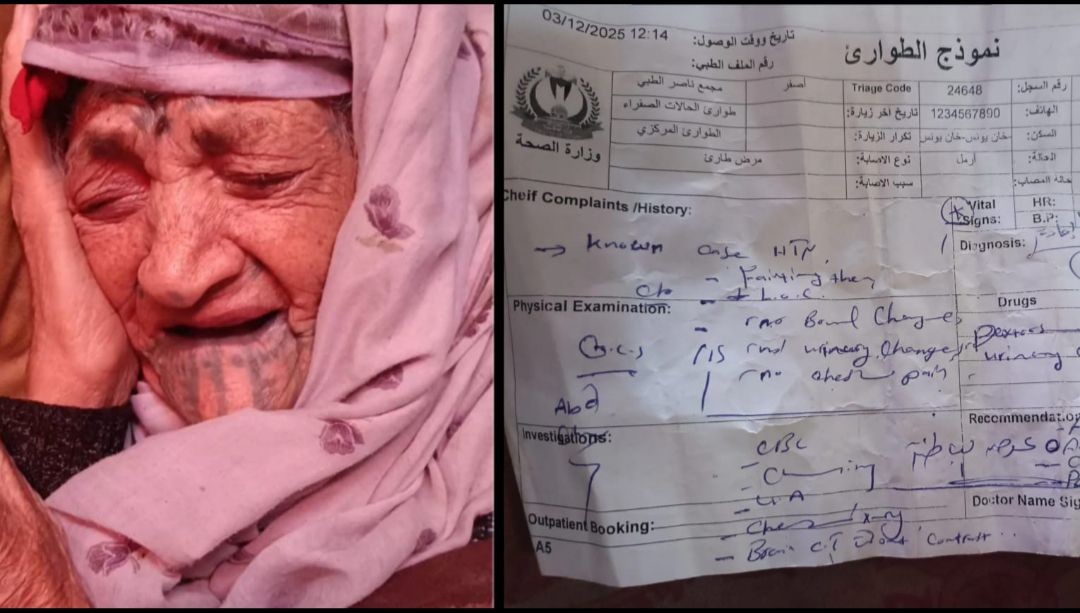
@evan I know you may have seen my message and couldn’t reply, and I understand. Please allow me to ask one gentle question. My mother and I live in a tent in Gaza. She is ninety years old, blind, and immobile. She suffered a stroke and urgently needs open-heart surgery. Her fragile body is covered in painful sores because we have no diapers. I watch her suffer every day, unable to ease her pain. It breaks my heart. Are the cases you choose to support more difficult than my mother’s? 💔
@evan Dear Evangelo,
Thank you from my heart for your generous donation. My mother was very happy when I told her about your kindness. Tomorrow I will buy her diapers because of you.
She is fasting these days, and she will pray for you every day during Ramadan, mentioning your name in her prayers.
May God bless and protect you always. 🤍


@virtuous_sloth the browser is loading a page on a.example that calls the API at b.example (either server-side or client-side, but much easier server-side) and formats the JSON response as HTML.
@evan That is not as clear as you seem to think.
When you say "the browser is loading a page on a.example" I think you really mean "the browser is loading a page *from* a.example". When you say "that calls the API at b.example" what I think you really mean is "the browser that has loaded the page from a.example which includes javascript code then runs that code which, in the browser, makes an HTTP connection to the b.example website, using the web API there to get some data. That data is ...
@evan either HTML representation of the information requested (in the case of server-side, which means server-side production of HTML which is then rendered in the browser, possibly as a subsection of the loaded page from a.example) or is simply data which is then received by the javascript in the browser that is then rendered into HTML by the javascript (in the case of client side), perhaps directly modifying the DOM of the page in the browser.
Maybe. I think developers think they are being...
@evan clear when they are really relying on the reader to have developer-level understanding of all the moving parts that are hinted at by plain English words that do not mean the loaded information without explicit knowledge by the reader.
I'm not a developer, have a very good understanding of where code can run in what contexts on multiple servers with data flowing between them, which is how I guess at the above, but do not know enough details to be sure.
@evan And yes, I know that any communication would be tortuous if you had to assume nothing of your reader.
I suppose that is why I do appreciate it when you qualify your surveys with, for example, "Full-stack developers only".
@evan To be more explicit, I think I understood your explanatory reply to your original survey but wanted clarification that the repeated word "it" was referring to the user's browser, or perhaps "the user's browser running javascript loaded in the page fromm a.example".
Your first sentence response to my question seemed to confirm this. But then your followup about server-side or client-side made me wonder if my contra-example of a.example proxying interaction with b.example was correct.
@virtuous_sloth It's usually correct. A lot of Fediverse servers use CORS or authenticated fetch to prevent loading the data directly into the browser. I feel like you're getting very particular about how it's implemented, which is fine. If that's important to you, express why and how it affects your answer in a reply.
@evan Very well.
I'm trying to understand even the point of the question. In my mind, a web app running in a user's browser is under the user's control, for the most part, so even if the author of the web app thinks the answer is 'no' they have little recourse for users who modify the web app to show remote content when unauthenticated.
Should an unauthenticated user have access to data on b.example is a decision for b.example. But if b.example trusts a.example and a.example proxies...
Edited 6d ago

@chillicampari @evan
That was my concern exactly (I voted "yes, but"):
e.g followers-only content shouldn't be public just because a follower's instance has access to it. In a perfect world this would have been end to end encrypted.