📍
"Do not disturb my circles." — Archimedes. 📐✨ ⭕
#Archimedes #AncientGreek #DoNotDisturb #MathArt #HistoryVibes #JohnRoss7 #Mastodon
📍
"Do not disturb my circles." — Archimedes. 📐✨ ⭕
#Archimedes #AncientGreek #DoNotDisturb #MathArt #HistoryVibes #JohnRoss7 #Mastodon
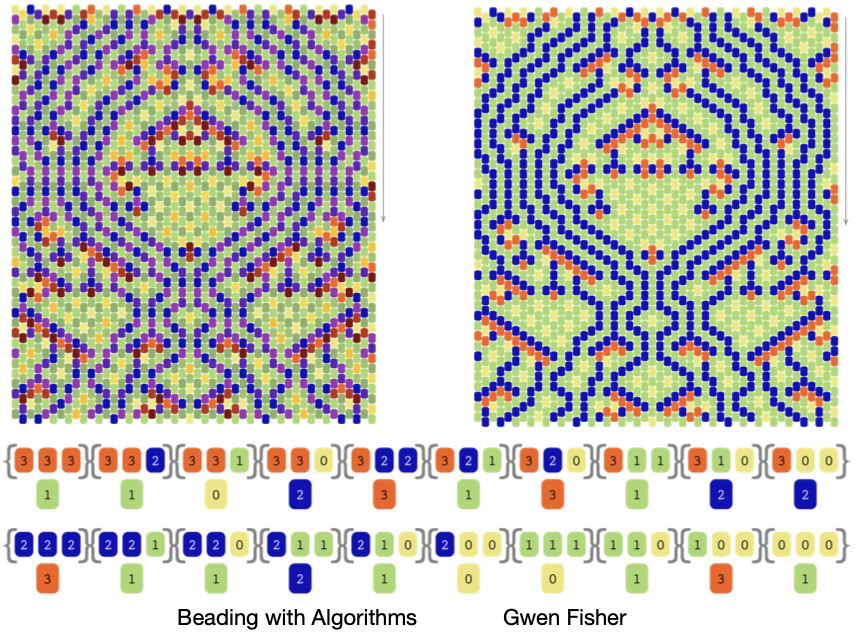
All of the cellular automata rules I’ve shown you so far are among the simplest ones, but there is no upper bound to how complex they can be. Here, you can see a four-color multiset rule with its 20 parts and two symmetric examples of the patches it generates. On the left you can see the patch with color cycling with a period of three. So the left patch uses 12 colors. On the right is the same patch without color cycling. #mathart #math #generativeart #algorithms
There seems to have been a long-standing connection in mediaeval Islamic thought between calligraphy and geometry.
The scholar Abū Ḥayyān al-Tawḥīdī (c.930–1023) wrote that ‘handwriting is spiritual geometry by means of a corporeal instrument’. Much later, Aḥmad Ibrāhīmī Ḥusaynī Qummī (b. 1546) wrote in his treatise ‘Calligraphers and Painters’ (c.1606) that ‘writing is the geometry of the soul’. Al-Tawḥīdī attributed the idea to Euclid; Qummī pointed to Plato, so both undoubtedly thought that the idea was long-standing and respected.
Calligraphy was codified by Ibn Muqla (885/6–940/1 CE), a vizier at the ʿAbbāsid court. Ibn Muqla's system can be only tentatively reconstructed from later sources, but it is plausible that he founded his reformed Arabic script on geometry.
The basis was the rhombic dot that a reed pen produced. The ʾalif [ا] was to have a height equal to a certain number of dots. Its size defined a circle, which was then used to shape the other letters. The attached images illustrate a later geometric specification.
1/2
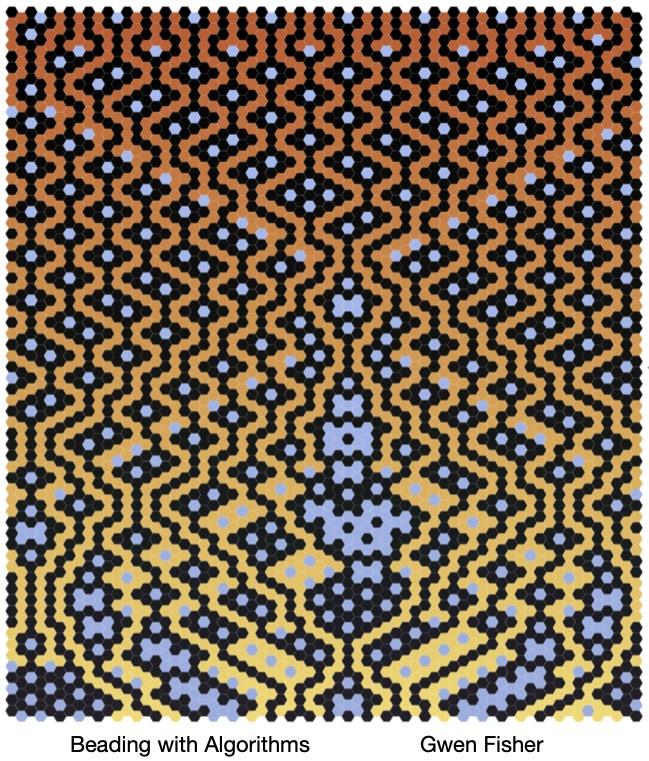
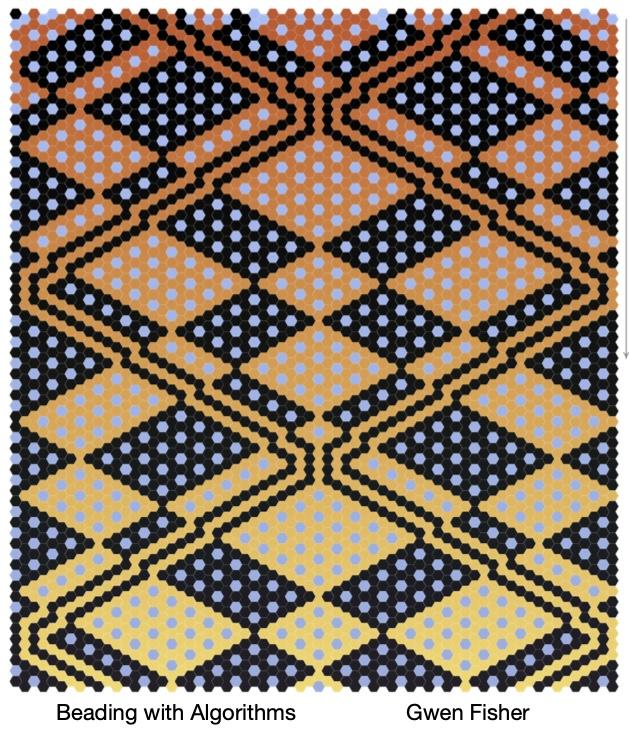
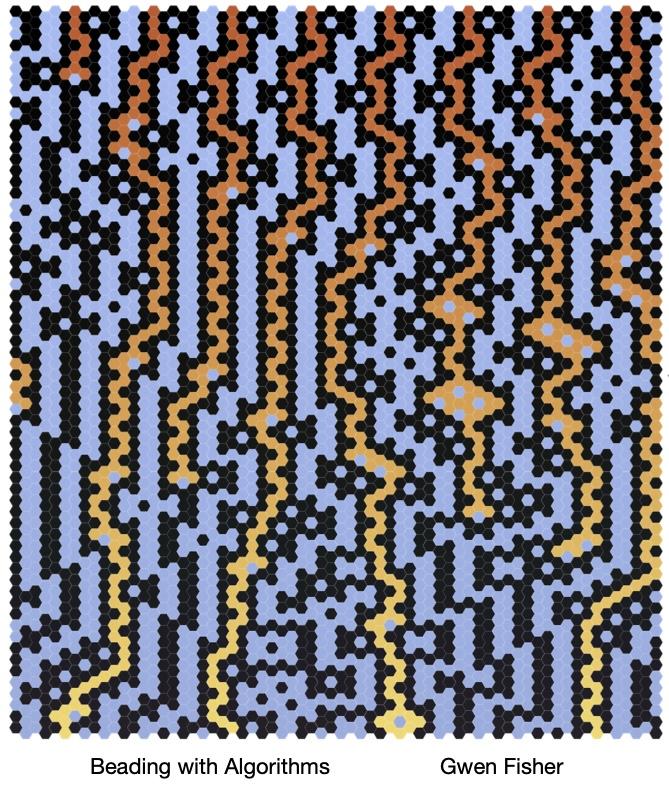
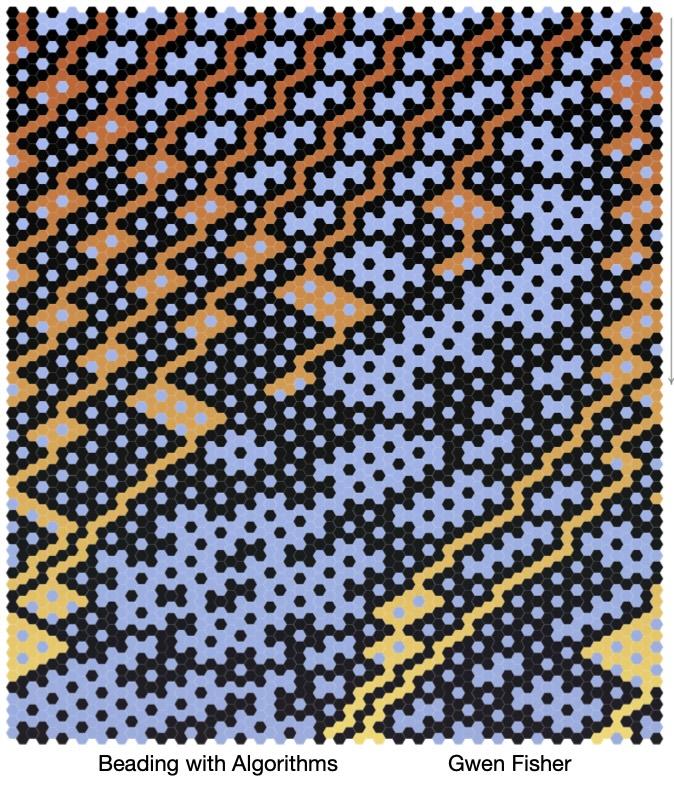
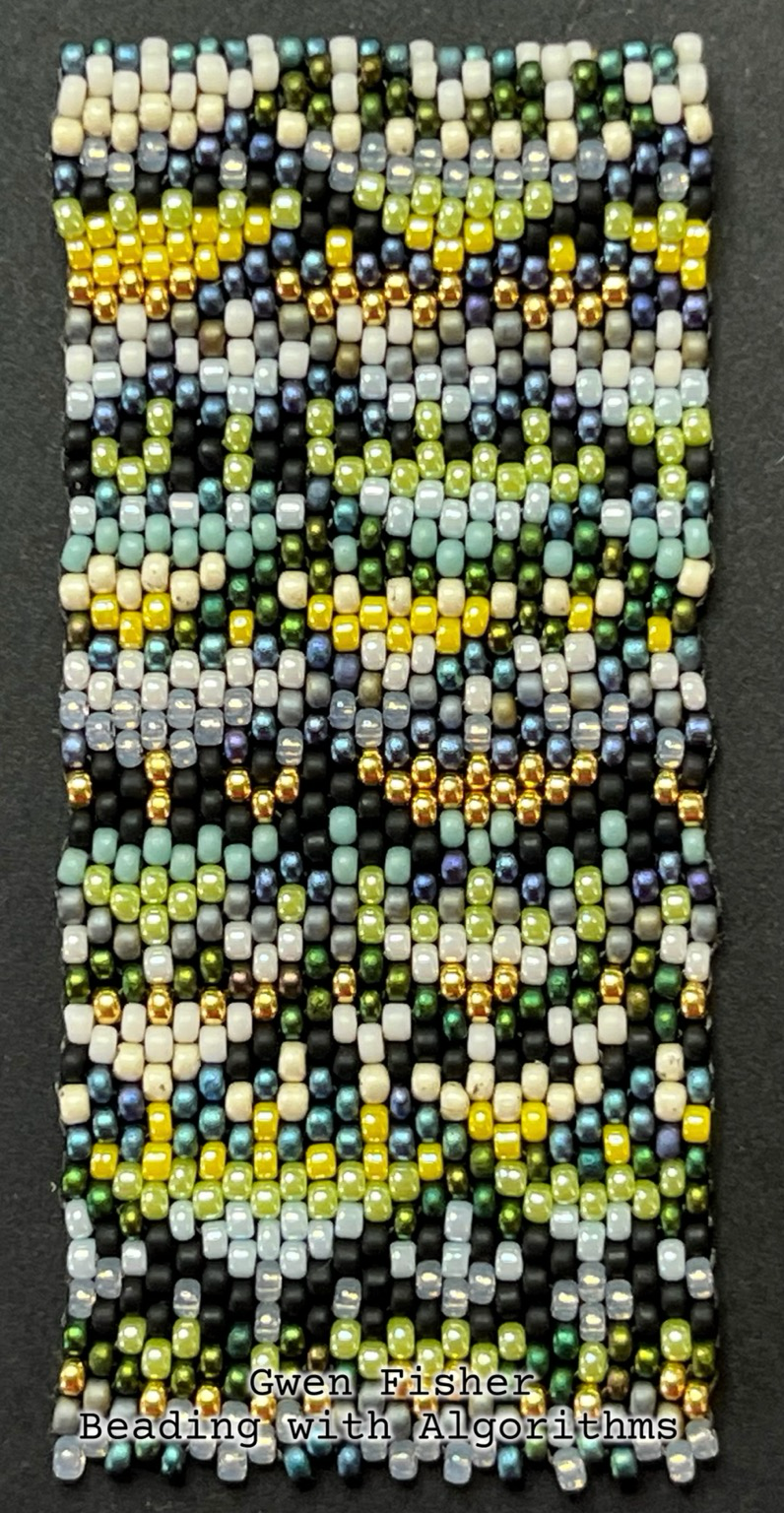
This is cellular automata applied to a staggered grid, like we use in beaded peyote stitch. All of these images were created with the same algorithm, what I call “Vines on a Fence.” The only difference among them is how I started each patch. I give the recipe for Vines on a Fence on page 105 of my new book, Beading with Algorithms #mathart #cellularautomata #algorithms
I’m an author, illustrator and designer interested in #origami, #MathArt, #tiling, education and other things that I’ve found here like like #Enshittification and #genuary. I use graphics software and programming environments including #geogebra. #introduction
Most media is by me unless otherwise stated.
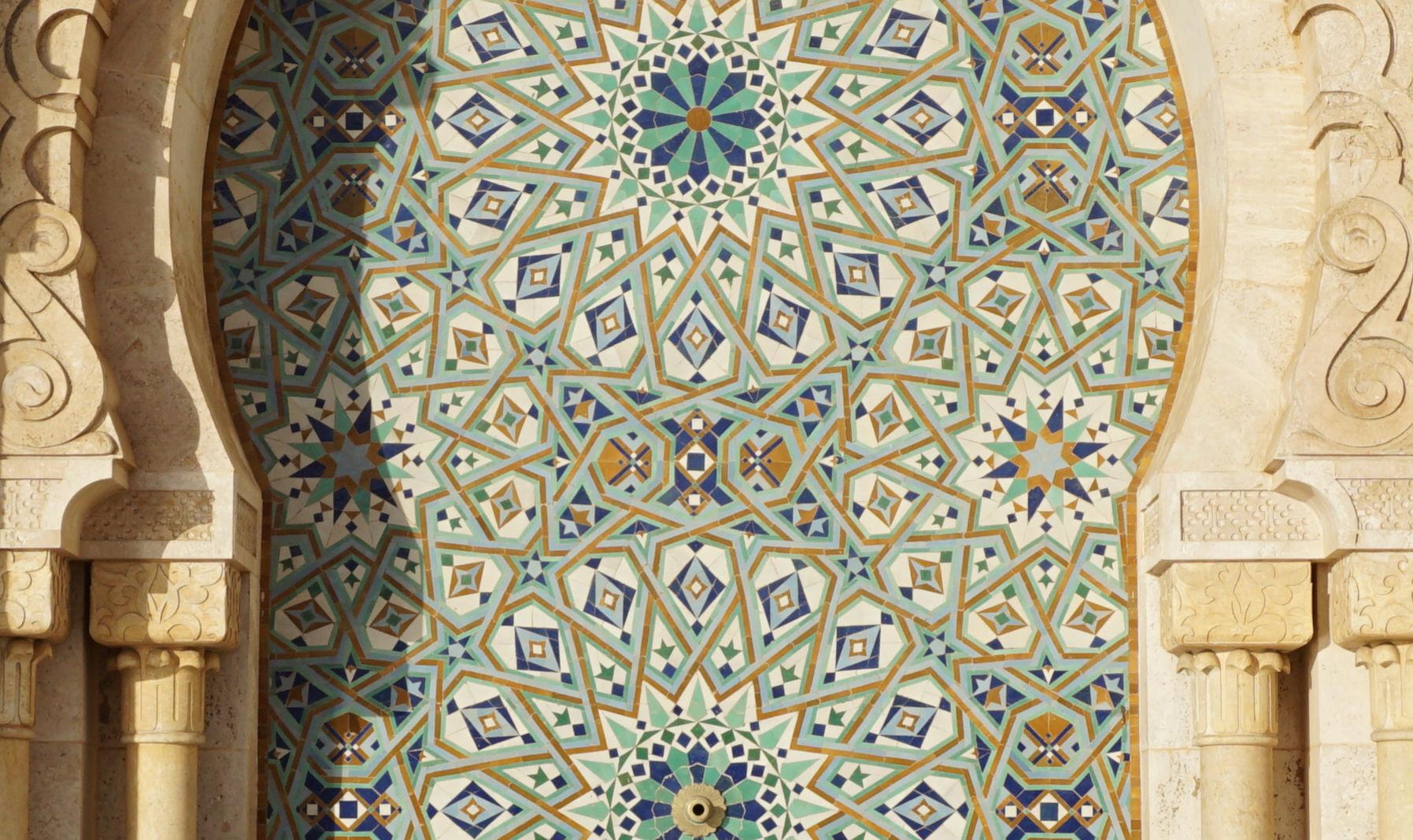
Detail of a fountain at the Hassan II Mosque, Casablanca, Morocco
#TilingTuesday #geometry #tiling #MathArt #photography #design #IslamicPattern #IslamicArt #zellij #zellige #TravelPhotography
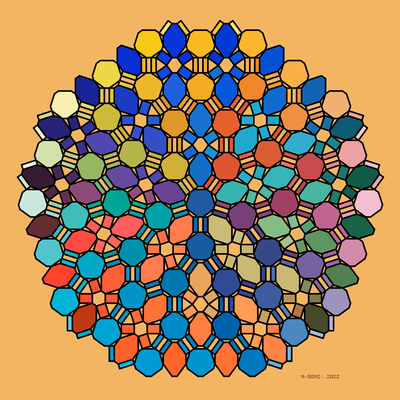
#TilingTuesday - closed tiling of 122 equilateral polyhedra.
Exploring new shape in upcoming release by @hedron
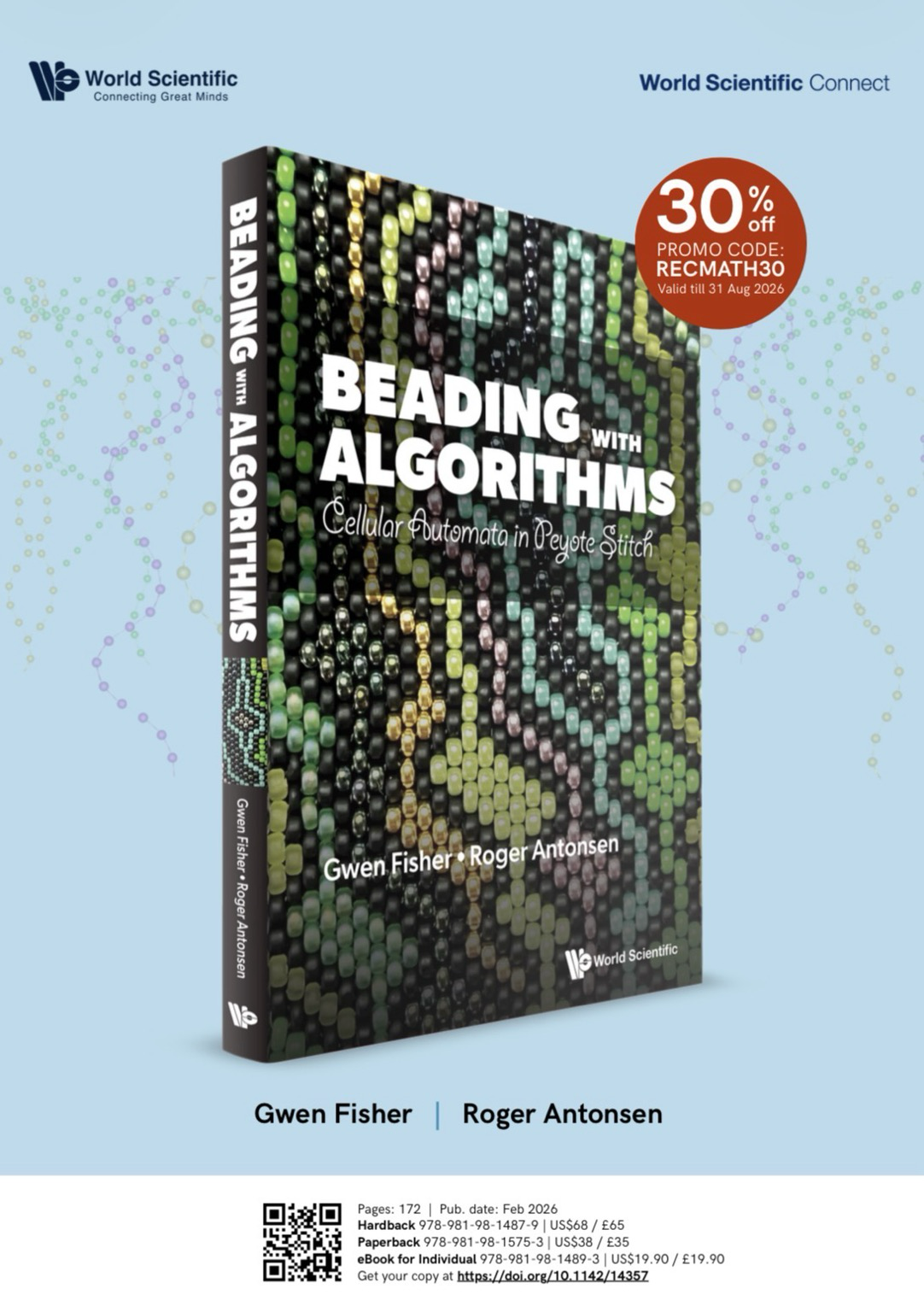
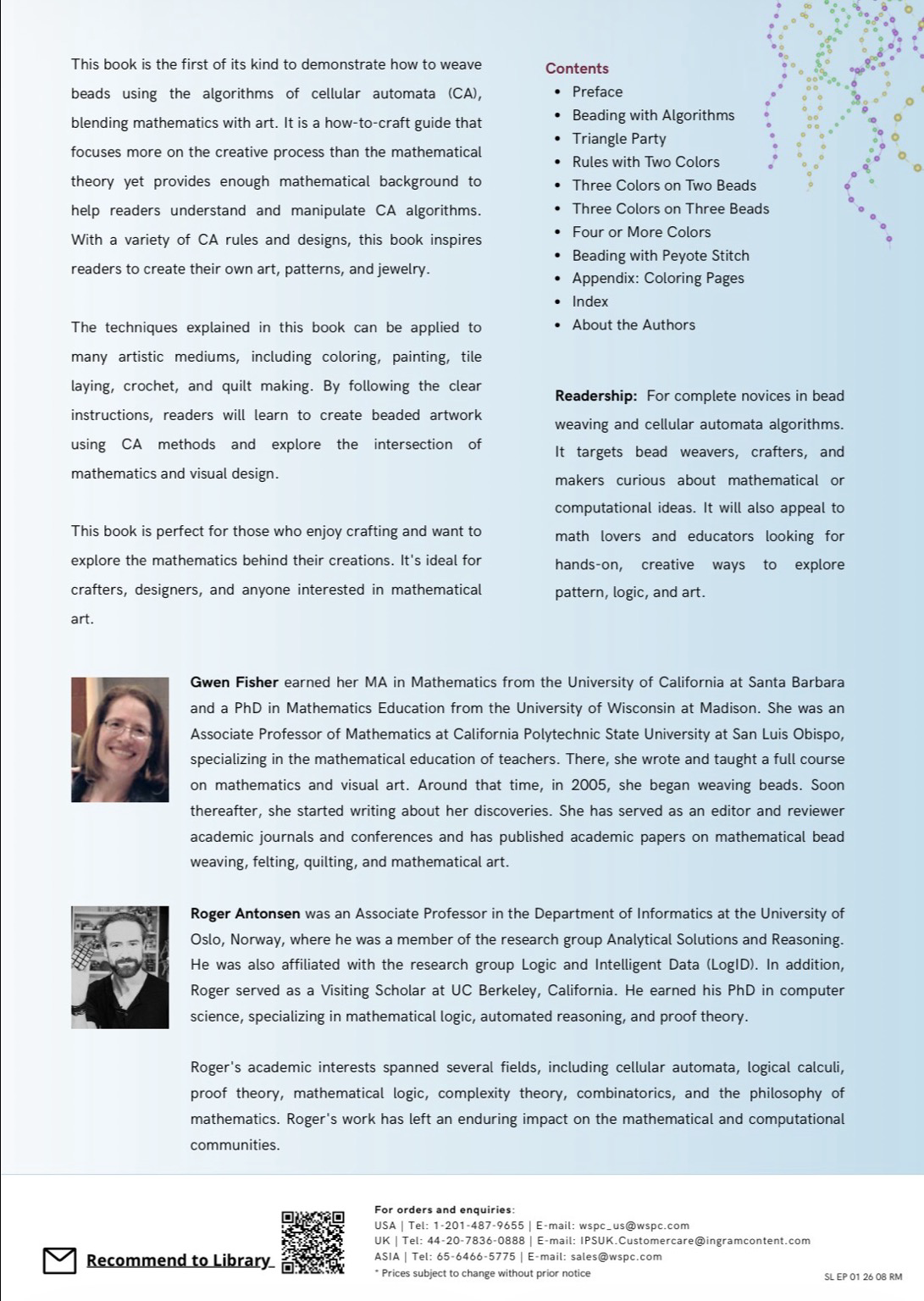
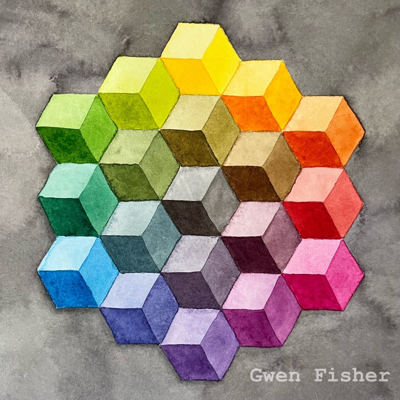
Twelve years. I started this project twelve years ago, and today I hold the result in my hand. It’s a book that combines bead weaving with math called, “Beading with Algorithms: Cellular Automata in Peyote Stitch.” With help from mathematician and artist Roger Antonsen, graphic designer Zelda Lin, a handful of talented proof readers, and the good people from World Scientific Publishing Company, my dream of combining my loves of math, art, and teaching into a book is finally a reality.
This book is the first of its kind, a recipe book of algorithms that can be used and combined to generate colorful patterns in peyote stitch beadwork in any size and shape you desire. These algorithms could also be applied to other pixelated art forms like tile laying, embroidery, crochet, and quilts. We included projects like bracelets, pill pouches, pendants, beaded beads, and key chains. We also included a bunch of different grids that you can photocopy and color with markers.
Of course I’m biased, but I think it’s a really beautiful book. We included multiple colorful images on almost every page, 172 pages in all. It was a huge layout challenge, but Zelda nailed it. My original goal was to write 128 pages on how to use algorithms to make beaded jewelry, but the more we explored the space, the more we found. Not just millions of algorithms, the space of possibilities is infinite. So of course, we couldn’t include them all. But we used math and Roger’s custom software that he wrote for this project to help us find dozens of the easiest algorithms and more than a hundred more in increasing levels of complexity. We included all of our favorites. 1/2
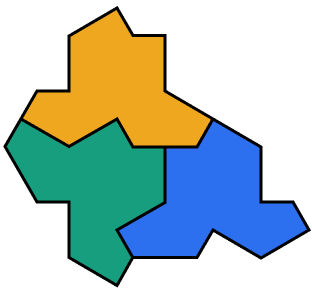
#Mathstodon & friends: interested in aperiodic monotile enamel earrings? I kind of want this for myself but the company I’ve used in the past (Made by Cooper) is much cheaper for larger orders.
Please retoot for visibility! But only hit the favstar if you’d more likely than not buy a pair if I set up a ko.fi shop for them. Price probably ~$20/pair for two earrings and US shipping.
#aperiodic #monotile #mathart #hat #earring #ItsAnEarringNotAHat #TheTileIsCalledTheHat #LooksMoreLikeATshirtToMe
![Geometrical specification of the structure of the Arabic letter ʾalif [ا]. Eight rhombic dots from a reed pen, stacked vertically, give the height of the letter, which defines the diameter of a circle used for other letters.](/proxy/post_attachment/45111/1d770ce2f4.png "Geometrical specification of the structure of the Arabic letter ʾalif [ا]. Eight rhombic dots from a reed pen, stacked vertically, give the height of the letter, which defines the diameter of a circle used for other letters.")
![Geometrical specification of ṣād [س], based upon the dimensions established for ʾalif. The letter has a long curving stroke to the left, which follows an arc of a circle of the size defined from ʾalif. The vertical strokes of the letter are two rhombic dots high.](/proxy/post_attachment/45112/3543bd8fa4.png "Geometrical specification of ṣād [س], based upon the dimensions established for ʾalif. The letter has a long curving stroke to the left, which follows an arc of a circle of the size defined from ʾalif. The vertical strokes of the letter are two rhombic dots high.")