Wenn #SocialMedia ein #System ist, das Ideen nach Resonanz filtert …wer trennt dort Signal von Lärm …Macht, Gewohnheit oder Erkenntnis?Und zeigt sich die Adaptionsfähigkeit eines Netzwerks vielleicht genau dort, wo Irritation nicht sofort unterdrückt wird? #CRTI 🖖
system

ZUSTANDSBERICHT der NATION 🚩
aus erster Hand (Rechtshänder)
& was uns Sozialstaats-Genießern
wichtig ist 🙇
1. sich am #System schadlos halten
2. sich eine kontemplative Grundherren Haltung bewahren
3. sich vom #Gemeinwohl kein OhAh Oxymoron vormachen lassen, solange die #Linke nicht mal auf 5% kommt
#chill #politik #umwelt #klima #leben #aufklärung #medien #gesellschaft #manipulation #zukunft #jugend #bildung #zdf #cannabis #mentalhealth #mastodon #mindset #fernsehen #tv #3sat #kultur #fediverse #reichweite #werbung #klimaschutz


I have held off writing my #introduction here until I had a feel for how I might fit into this community.
Mostly, I tend to boost and favorite posts about anthropogenic global warming, USA politics and to a lesser extent global politics, health, food, job search, and ecosystem, system & systems thinking, complexity, causation and science. I haven’t been posting much. When I do post, it will generally be on topics in my profile…🧵
#introductions #system #climateChange #science #politics #food
Edited 1y ago

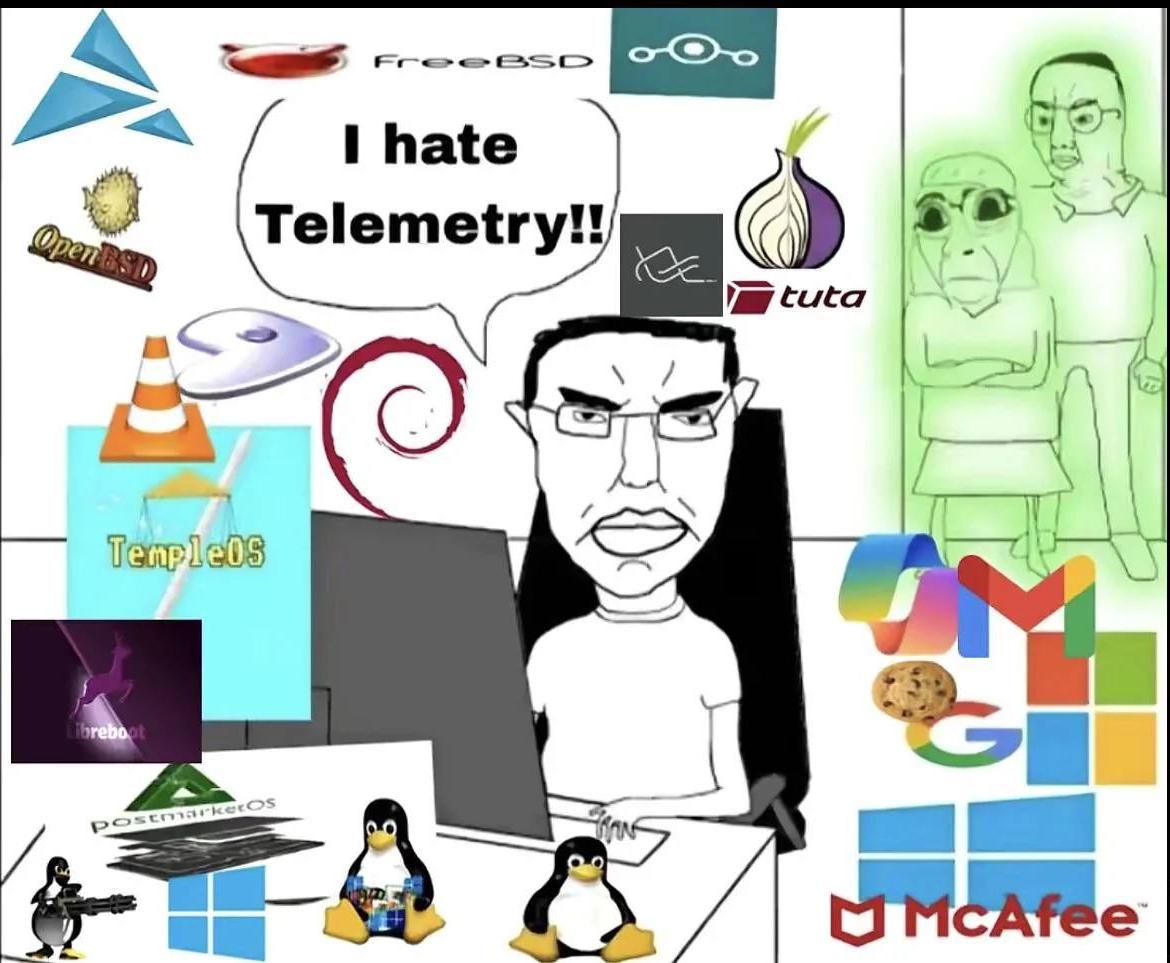
Telemetry: Helpful Tool or Digital Surveillance?
The word #telemetry sounds technical and harmless. Many people have never heard it before. But in simple words, telemetry means this: "Your device sends small pieces of information back to the company that made the software." That can be useful. But it can also be dangerous.
Today, large technology companies — often called Big Tech — collect huge amounts of data. They track clicks, searches, locations, and habits. Often this happens quietly in the background. For many people, telemetry feels like mass surveillance with a friendly name.
But the truth is more complicated.
Why Telemetry Is Not Always Bad
Imagine a city without traffic data. City planners would not know where traffic jams happen. They would not know where to build new roads. Telemetry can work in a similar way. If software developers know which features people actually use, they can improve those features. They can fix problems faster. They can remove tools that nobody needs.
The problem is not the measurement itself. The problem is how it is done.
When Data Becomes a Business Model
Many big corporations collect data aggressively. Users often do not fully understand what they agree to. The data is stored on large servers and sometimes sold or used for targeted advertising. In this system, the user is no longer the customer. The user becomes the product. This creates distrust. People feel observed. And when people feel observed, they behave differently.
The British writer George Orwell described this fear in his famous novel Nineteen Eighty-Four. In that story, constant surveillance changes how people think and act. It creates self-censorship and fear. Many citizens today worry that digital life is slowly moving in that direction. Some even point to countries like China, where digital monitoring by the state is widespread. Whether one agrees with this comparison or not, it shows how strong the concern has become.
A Different Approach: Ethical Telemetry
There is another path. In the world of free and open-source software — often called FLOSS — communities build software together. They value transparency and freedom. Instead of rejecting telemetry completely, this community could ask a smarter question: "How can we collect useful data without violating privacy?"
For example: "Can we measure which Linux systems are used in daily work — without tracking individuals?" Can we find out which text editor or file manager is most popular — without collecting personal details? Can statistics be truly anonymous? These questions matter.
Right now, many discussions are based on guesses. For example, the website DistroWatch publishes popularity rankings of Linux systems. Some critics claim these rankings may not reflect real usage. Without reliable and transparent data, it is hard to know the truth.
The Real Issue: Trust
The debate about telemetry is really a debate about trust. People do not reject data collection because they hate technology. They reject it because they feel powerless. If companies force data collection, hide it in long legal texts, and use it mainly for profit,
trust disappears. But if data collection is: voluntary, clearly explained, anonymous, open to public review, and stored securely then telemetry can serve the public instead of exploiting it.
A Choice About the Future
Technology is not the enemy. It is a tool. Fire can warm a home or burn it down. The difference lies in how it is controlled. Society now stands at a crossroads. We can allow a future where every click is tracked and monetized or we can demand clear rules, transparency, and ethical standards. The question is not whether telemetry exists. It already does. The real question is: "Who controls it — and for whose benefit?"
If citizens, developers, and policymakers work together, telemetry could become a tool for improvement instead of surveillance. The future of digital freedom depends on the answer.
#news #surveillance #question #tracking #meme #technology #Internet #freedom #foss #floss #software #bigtech #economy #business #capitalism #system #matrix #user #computer #future #problem #community #linux #tux #ethics #software #development #code #humanrights #privacy #online #humanity #os #alternative #digital #politics #system #matrix
Edited 11d ago

In this video, Leslie Lamport, winner of the 2013 #Turing Award, best known for his seminal work in #distributed #systems, speaks about the key differences between #programming and #coding. #System #writing #thinking #algorithm https://www.youtube.com/watch?v=4RptzbNNoU0


“El ciclismo es la muerte lenta del planeta”.
Así provocó un banquero a una sala llena de economistas. No para atacar a la bicicleta, sino para desnudar una lógica incómoda.
Un ciclista no compra coche ni pide préstamos. No paga gasolina, seguros ni grandes reparaciones. No usa aparcamientos de pago ni genera obras viales. No engorda con facilidad. No llena salas de espera ni consume medicamentos de forma constante.
Desde esa mirada estrecha, una persona sana “no aporta” al sistema porque no gasta.
En cambio, cada nuevo local de comida rápida sí mueve la rueda: empleo, consultas médicas, tratamientos, dietas, soluciones para problemas que antes no existían. Todo suma al PIB. Todo cuenta como crecimiento.
La pregunta no es si la bicicleta es mala para la economía.
La pregunta es qué tipo de economía necesita que la gente enferme para funcionar.
Elegir entre una bicicleta o un McDonald’s no es una broma.
Es un espejo.
(recogido de la página datoshistoricos.com)
Edited 51d ago

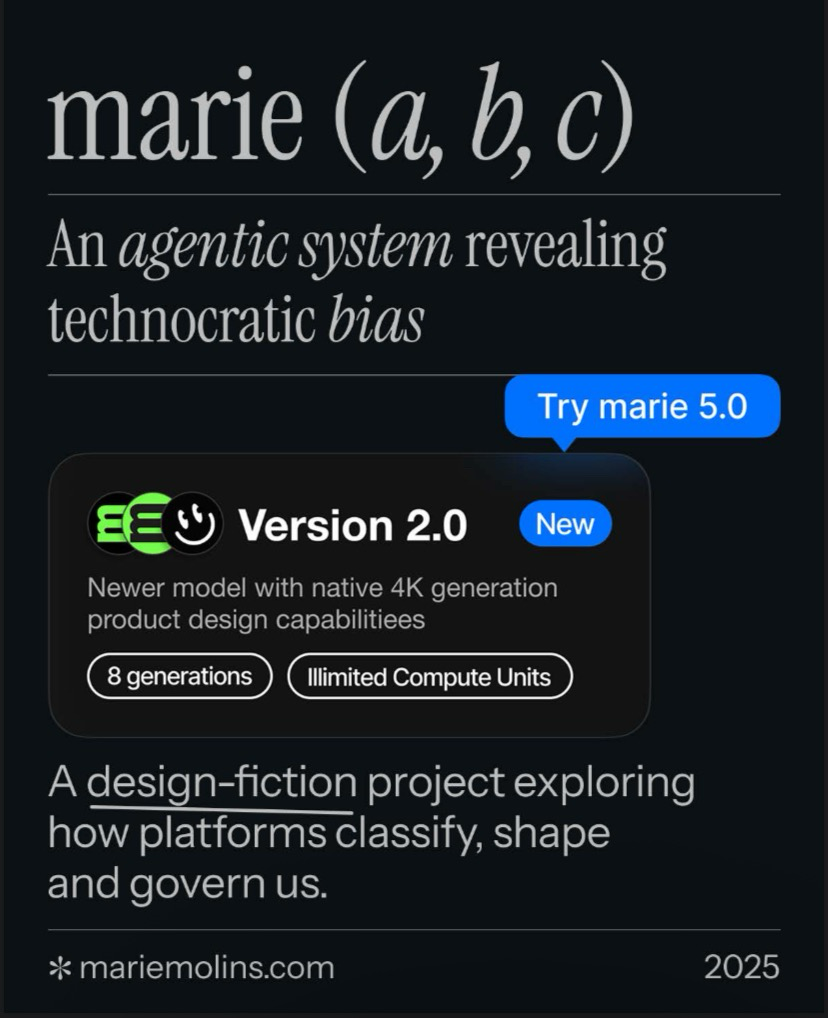
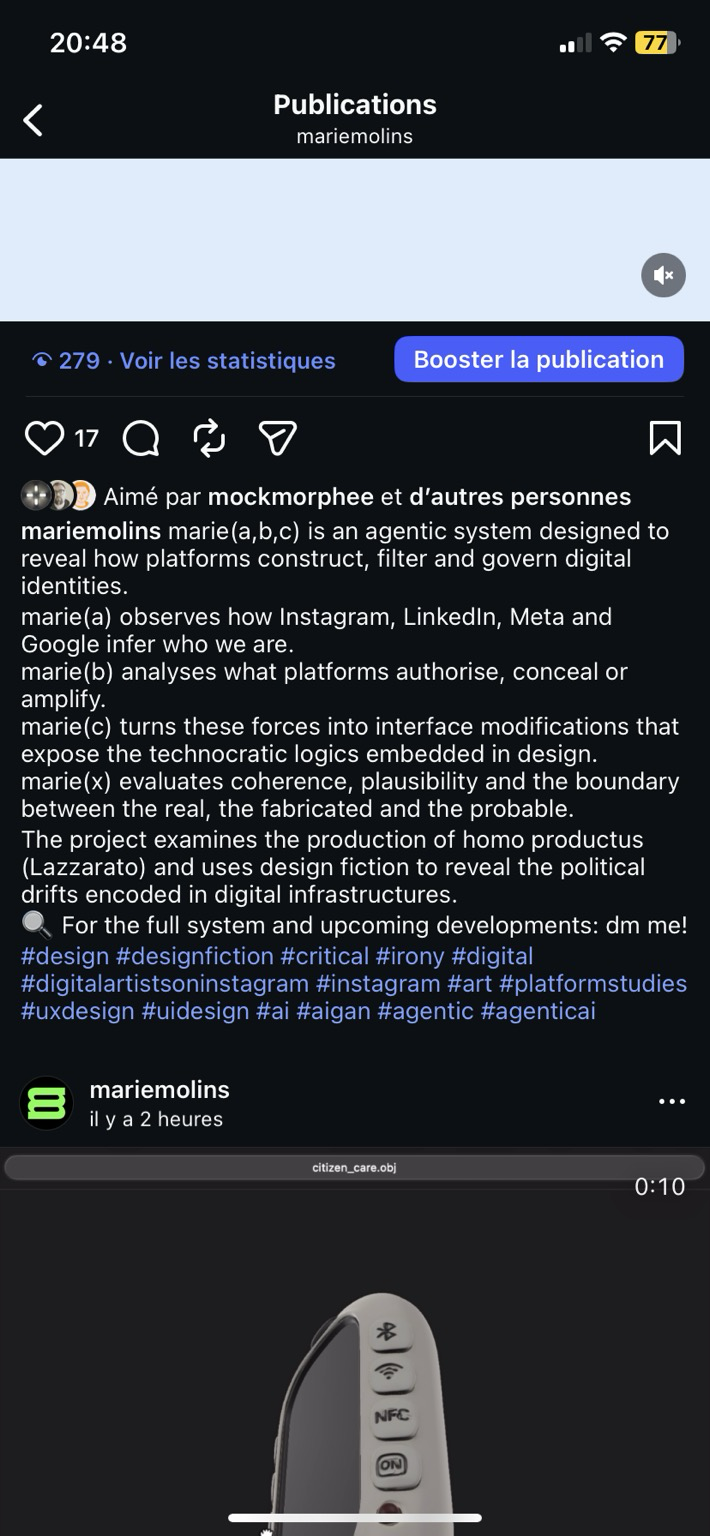
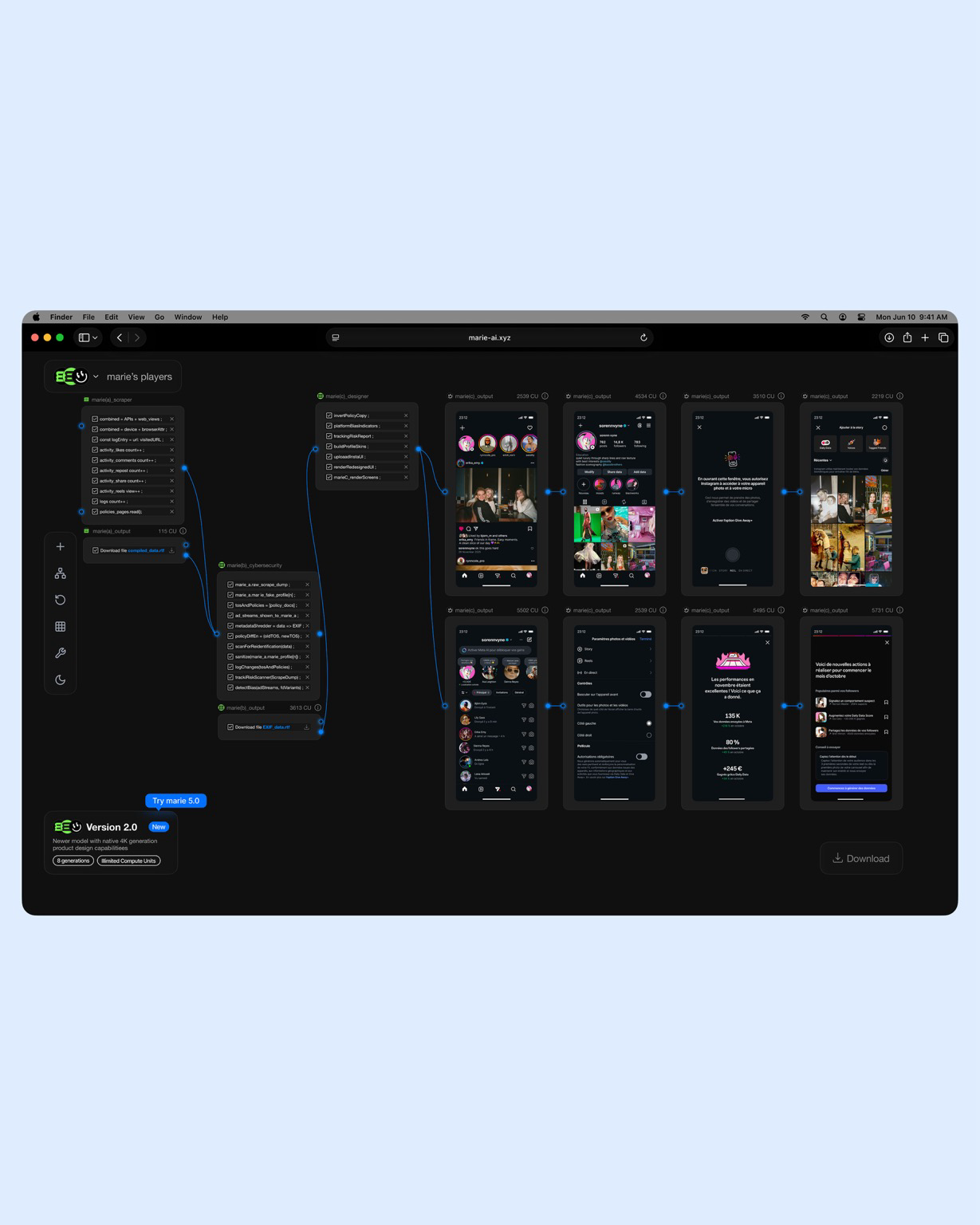
TLDR : 🔍 New Research Project: marie(a,b,c)
A multi-node #agentic #system designed to reveal how major platforms construct, filter and govern digital identities.
Why it matters?
The project examines the emergence of #homoproductus (Lazzarato) inside digital infrastructures, and uses design fiction to surface the political logic embedded in contemporary interfaces.
If you are working on platform studies, algorithmic governance, critical design or digital art, this project may resonate.

The only good #system is a #SOUNDSYSTEM !?!
Edited 1y ago

Für den #Kapitalismus zählt nur was bezifferbar ist, Geldflüsse, #Humankapital, Börsenwert. Und all das spiegelt sich in den Geschäftsbilanzen wieder. Was der Kapitalismus nicht in Zahlen ausdrücken kann ist für ihn wertlos, etwa die #Umwelt, #Ökosysteme...
Wenn wir beginnen würden die #Natur in der #Buchhaltung zu berücksichtigen dann müsste der Kapitalismus etwa #Umweltschäden auf der Verlustseite bilanzieren.
Wenn wir die Buchhaltung ändern, ändern wir das #System.